
Blog
Types of Knee Replacement
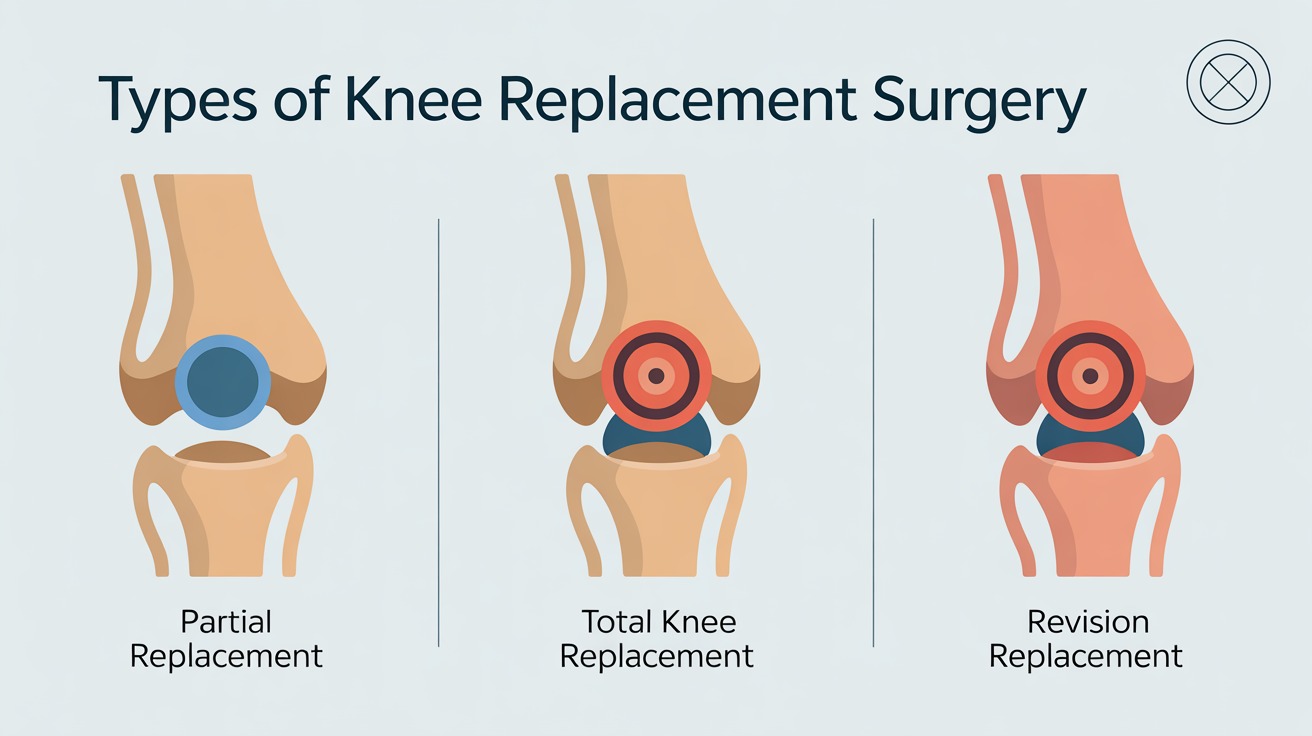
Knee replacement isn’t one-size-fits-all. Your surgeon selects the procedure that matches your anatomy, lifestyle, and X-ray/MRI findings:
- Unicompartmental (Partial) Replacement: Only the worn-out compartment—medial, lateral, or patellofemoral—is resurfaced. Benefits include smaller incisions and typically quicker recovery when damage is localized.
- Total Knee Replacement (TKR): The standard choice when arthritis affects multiple compartments. Surfaces of the femur, tibia, and sometimes the patella are replaced with biocompatible implants.
- Complex/Revision Replacement: Performed when a previous implant wears out, loosens, or infection occurs; uses specialized components for stability.
If you’re comparing hospitals for Knee Replacement Surgery in Navi mumbai ensure the team customizes implant selection (cruciate-retaining vs posterior-stabilized, cemented vs cementless) to your needs—once is enough for this key phrase.
Why is Knee Replacement Required?
Surgery is considered when non-operative care—activity modification, analgesics, targeted physiotherapy, weight management, braces, and injections—no longer controls pain or deformity. Typical signs you’re ready include:
- Pain most days, at rest or night
- Stiffness that limits walking, sitting cross-legged, or stair climbing
- Bow-leg or knock-knee deformity worsening over time
- Recurrent swelling or locking
When discussing options with a Knee Replacement Surgeon in Navi Mumbai ask about objective scoring systems (KOOS, WOMAC) and how they translate to your quality-of-life goals.
How Common is Knee Replacement Surgery?
Knee replacement is among the world’s most frequently performed and most successful orthopedic operations, with high satisfaction and implant survival in the 15–25 year range when alignment and soft-tissue balance are optimized. For patients exploring precision options such as Robotic Knee Replacement Surgery in Navi Mumbai technology can enhance planning and consistency—this phrase appears once here as requested.
What Are the Tests Recommended Before a Knee Replacement?
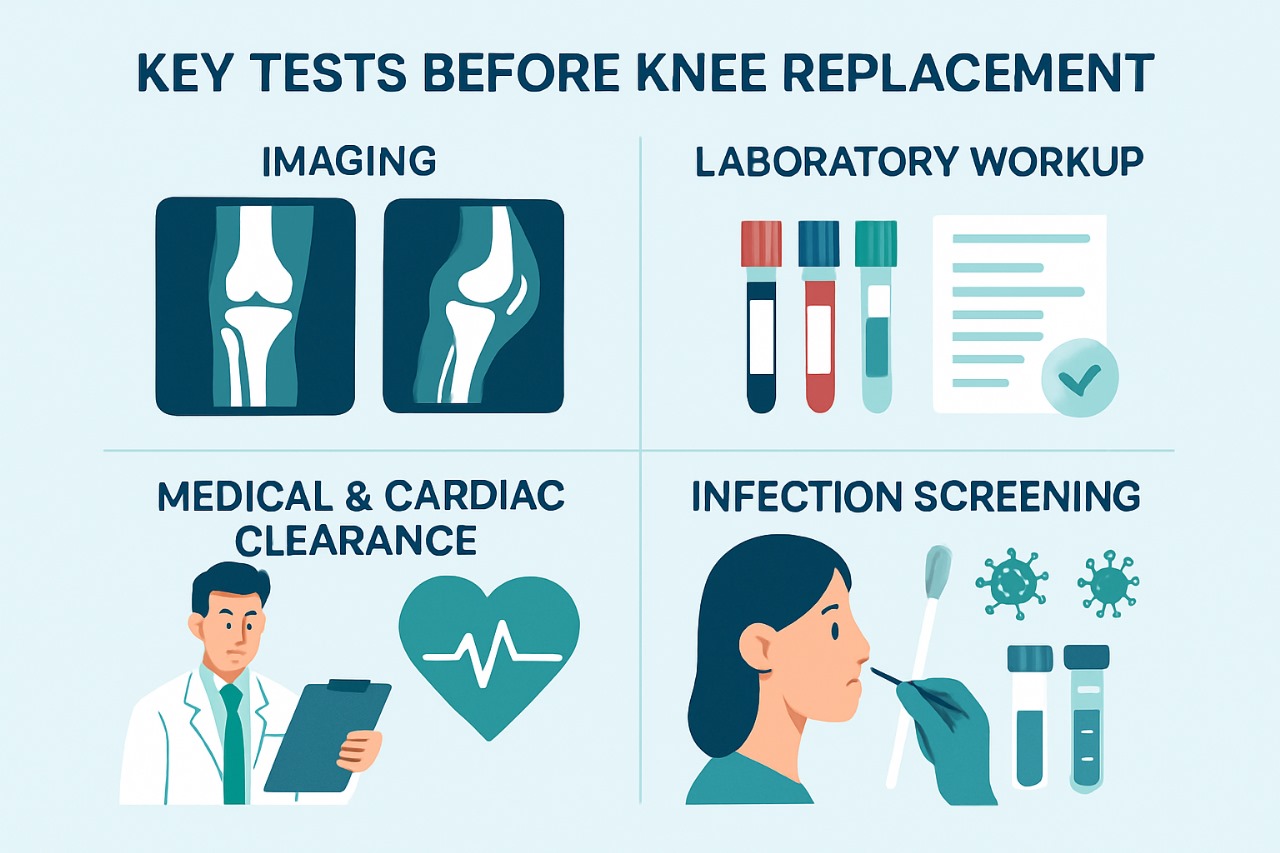
Pre-operative assessment ensures safety and predictability:
- Imaging: Weight-bearing X-rays (AP/lateral/skyline) and, in select cases, MRI or CT for templating.
- Laboratory Workup: Hemogram, kidney/liver function, blood sugar, Vitamin D, coagulation profile.
- Medical & Cardiac Clearance: Especially important if you have diabetes, hypertension, or heart disease.
- Infection Screening: Dental, urinary, and skin checks reduce risk.
Anesthesia Evaluation: To plan spinal vs general anesthesia and post-op pain control.
If you’re planning care around Panvel, explore our service page Knee Replacement Surgery in Panvel for logistics, day-of-surgery checklists, and ward protocols.
Exercises after Knee Replacement Surgery
Rehabilitation is non-negotiable. The right exercises restore motion, stability, and confidence:
- Ankle Pumps & Quad Sets: Reduce clot risk and re-activate the thigh.
- Heel Slides & Assisted Flexion: Gradual bending without forcing pain.
- Straight-Leg Raises & Short-Arc Quads: Build extension strength for gait.
- Glute Bridges & Hip Abduction: Pelvic control for balanced walking.
- Sit-to-Stand & Step-Ups: Functional drills that translate to daily life.
- Stationary Cycling: Low-impact circulation and range maintenance.
Your therapist will cue proper form and dosage. Consistency beats intensity—slow, steady gains protect the implant and soft tissues.
Minimally Invasive Knee Replacement
Smaller incisions and careful muscle-sparing approaches can lessen early pain and speed mobilization. At orthorobo, selection for minimally invasive techniques is based on anatomy, body habitus, deformity, and bone quality. When combined with navigation or robotics, it can improve component positioning. If you’re evaluating technology-enabled care, consult a Robotic Knee Replacement Surgeon in Navi Mumbai to discuss accuracy, soft-tissue balance, and expected recovery—mentioned once here.
Why Choose Robotic Knee Replacement?
Potential advantages include:
- Less Early Pain & Swelling: Muscle-sparing paths reduce tissue trauma.
- Faster Rehab Start: Earlier quadriceps activation and gait confidence.
- Cosmetic Scar: Shorter incision with meticulous wound care.
- Potentially Quicker Return to Work: Especially for seated roles.
These benefits depend on correct patient selection, meticulous technique, and diligent physiotherapy. Outcomes also hinge on implant alignment—one reason image-guided planning is valuable when seeking the Top Knee Replacement Surgeon in New Bombay.
Who is an Ideal Candidate for Minimally Invasive Knee Replacement?
You may be a good candidate if:
- Arthritis is advanced but not accompanied by severe deformity or stiffness
- Body mass index allows safe exposure through a smaller window
- Bone quality is adequate and there’s no complex ligament deficiency
- You’re committed to early mobilization and structured rehab
- Some cases still benefit from a standard approach for maximum visibility and safety. During your consultation, Dr. Saurabh Kulkarni will balance precision, exposure, and soft-tissue protection to choose the safest path for long-term results. Patients comparing facilities for Knee Replacement can also view directions and reviews here Knee Replacement Surgeon in Panvel
Why choose orthorobo?
- Experienced Leadership: Dr. Saurabh Kulkarni brings subspecialty focus and a data-driven approach.
- Personalized Planning: Implant type, bearing surface, and alignment philosophy tailored to your goals, sitting cross-legged, climbing stairs, or returning to long walks.
- AEO-Ready Patient Education: Clear answers to common questions (pain, timelines, driving, travel, and daily activity).
End-to-End Care: From prehab checklists to home-setup guidance and follow-up milestones.